After Donald Trump terminated the Biden-era Save repayment plan, borrowers now have more stringent payment deadlines.
Next month, there will be a major change of the American student loan repayment system, which will alter how millions of students settle their debt.
The Trump administration’s One Big Beautiful Bill Act, which was enacted last summer, and a recent court decision that mandated the termination of the Biden-era Save repayment plan are the causes of the set of reforms, which go into effect on July 1. In only a few years, the student loan system will undergo a number of significant changes, the most recent of which will be tighter payment deadlines and less forgiveness for borrowers.
“This is impacting, in my opinion, every single student loan borrower in one way or another – even if you don’t have to make a change in your loans, just the confusion alone,” said Natalia Abrams, the president of the Student Debt Crisis Center.
“I’ve worked in this space for more than 15 years, and I’ve never seen it this bad, and I’ve never seen it change this much, this frequently.”
Here’s a rundown of how the repayment system is changing and how it is affecting students.
What’s changing?
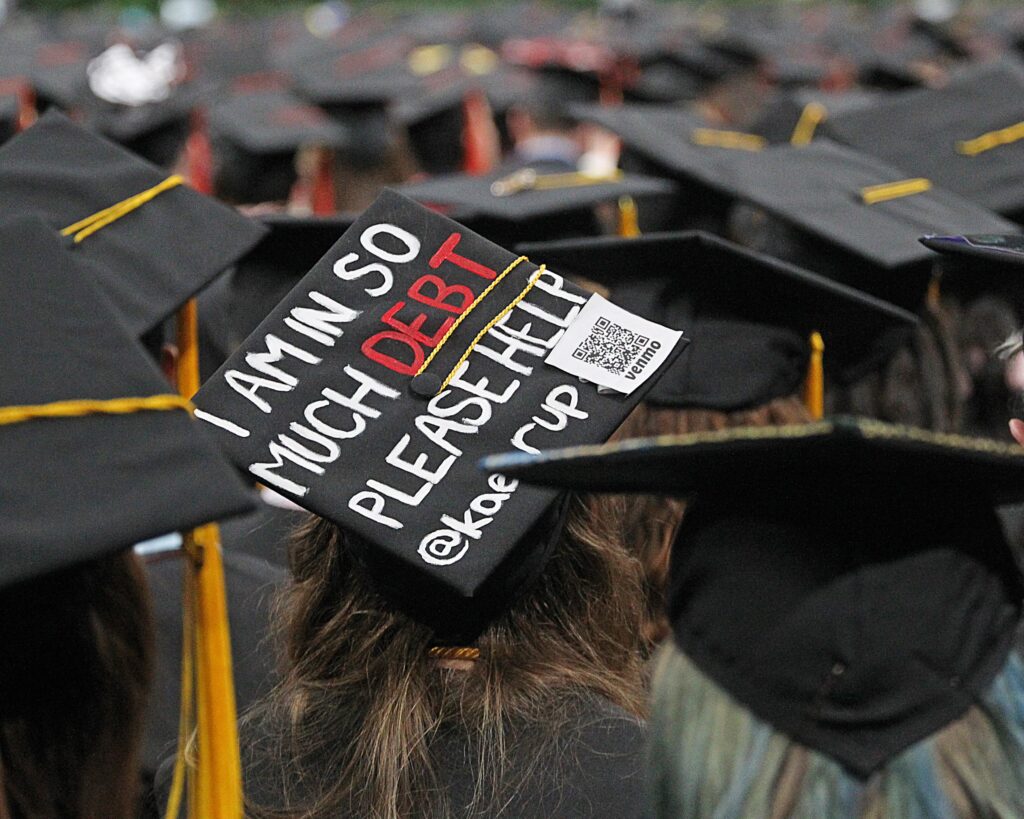
The Biden administration’s income-based repayment plan, “Save“, was introduced in 2023 and currently has over 7 million members. The initiative was designed to provide early forgiveness for borrowers with modest amounts, significantly reduce undergraduate loans, and eliminate monthly payments for some borrowers.
On July 1st, the Save plan will be formally abolished following a March verdict by a federal appeals court. The decision was made after the plan was contested by Republican solicitors general nationwide, delaying monthly repayments for years.
Monthly installments will resume on July 1st, and Save borrowers will shortly need to apply for an alternative payment plan.
What repayment options will borrowers have?
Borrowers will have ninety days to select an alternative repayment plan when the Save plan officially expires.
A number of current income-driven payment and fixed-income plans will remain available to borrowers whose loans were issued prior to July 1, 2026, and who do not intend to take out further loans.
These policies require borrowers to repay their loans faster and offer fewer possibilities for loan forgiveness than those provided under the Biden administration.
The income-based repayment (IBR), pay as you earn (Paye), and income contingent repayment (ICR) plans, which offer loan forgiveness between 20 and 25 years after payments, are among the income-driven payment plans currently available to borrowers. These plans are based on the borrower’s discretionary income. The latter two options, however, will also be dismantled by the summer of 2028.
A fixed-income plan, which is normally ineligible for loan forgiveness, will be automatically enrolled in by anyone registered in the Save plan who does not apply for another payment scheme. Because the fixed amounts are established to guarantee that loans are repaid within ten years, the monthly payments under a basic fixed-payment plan are often greater than those under income-based programs.
Two other fixed payment plans provide monthly payments that are either cheaper or progressively higher over a longer time frame.
Why is this happening now?
According to the Department of Education, the impending reform will make the student loan system simpler. “Borrowers have been caught in a confusing cycle of uncertainty for years, but the Trump administration’s policy is simple: if you take out a loan, you must pay it back,” said Nicholas Kent, the undersecretary of education, in a statement earlier this year.
The Biden administration’s approach to student loans, which included an attempt to eliminate $430 billion in student debt before the Supreme Court rejected it in 2023, has been reversed.
Experts say the new plans offered by the Trump administration are less forgiving than previous programs and will make college more prohibitive for future generations.
“We have an affordability crisis in our country, and having more expensive repayment plans is just going to affect the money that people have in their pockets,” said Abrams of the Student Debt Crisis Center. It feels like this has been designed by people that do not understand the student loan system,” she said.
William Elliott, the founding director of the University of Michigan’s Center on Assets Education and Inclusion, said student debt has shaped a generation, changing how Americans view the value of an education.
“I ended up with debt for over 20 years. And every day you get up, you think about that debt. I mean, it’s just an albatross around your neck,” he said. “It affects your ability to begin to build wealth like you want. It is just something that is constantly there, destroying the sense of a return on degree for you.”
Are there any new options for borrowers?
The repayment assistance plan, or RAP, and the tiered standard plan are the two new repayment options available to borrowers who want to take out new loans after July 1st, regardless of whether they already have debts.
Instead of using the borrower’s discretionary income, RAP bases monthly payments on the borrower’s adjusted gross income (AGI). Monthly payments range from 1% to 10% of the borrower’s AGI if it exceeds $10,000. The monthly payment is $10 for individuals who fall below that level. After 30 years, loans are forgiven.
The tiered standard plan is a fixed-payment plan that requires payments of at least $50 per month for ten to twenty-five years, depending on the beginning debt. Some borrowers may be automatically enrolled in this program if they are entering repayment and haven’t chosen another eligible plan.
How are students reacting?
Many recent college graduates are uncertain about whether they will be able to take out loans in the future under the new payment method, so they are preparing for the change.
Ryan Coryea, a 21-year-old senior at the University of California, San Diego, stated that she intends to return home to Texas after graduation due to her inability to pay off her student loans in addition to growing housing and food expenses. Even if she is thinking about pursuing a master’s degree in public policy or law, the new payment arrangements might make it unaffordable.
“For me as well as for a lot of my friends, it’s really making us reconsider how we’re going to pay for grad school, and also if we’re going to go at all,” said Coryea, who is also an intern at the Student Debt Crisis Center.
Cassie Urbenz, who received her master’s degree from the University of Florida this spring, will soon begin repaying the $20,000 she borrowed for her undergraduate studies. She recently started working with the Florida Education Association as a union organiser and will shortly begin receiving slightly more than $200 a month.
“It’s really disappointing that I’m going to be having a lot of extra pressure to pay it off early” under the new repayment plan, she said. “It’s going to delay my own accumulation of wealth and set me back in that sense.”
About the Author